What to Check on Your Roof After a North Texas Hail or Wind Storm
You can learn a lot about storm damage without ever climbing a ladder.
October 14, 2026 · 4 min read
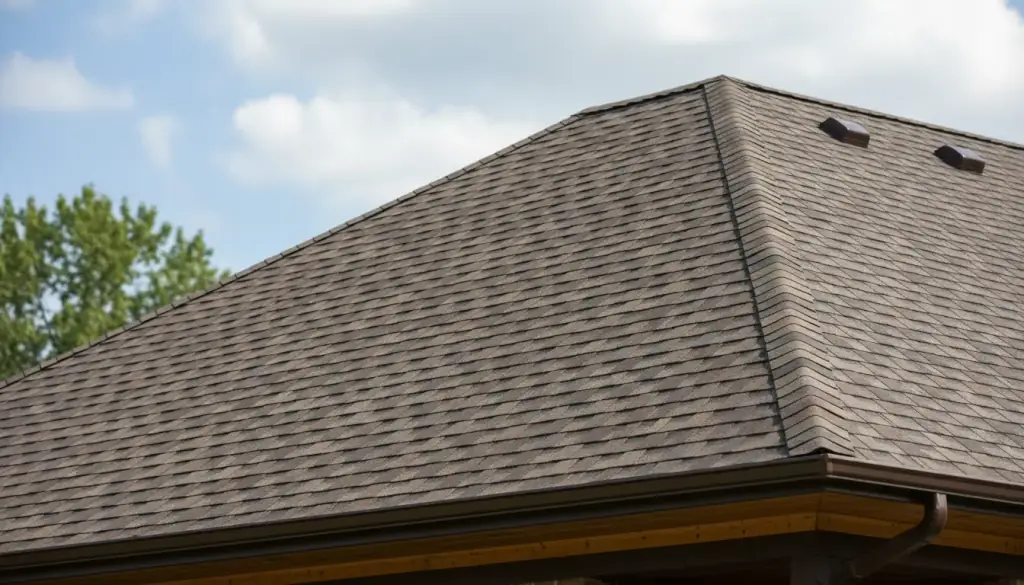
Storms in North Texas can come through fast. Hail rattles the cars, a straight-line wind pushes across the pasture for a few minutes, and then the sky clears and everything looks fine. The roof is the one part of the house you can't easily see, so it's the part most likely to get ignored. Here's a calm way to check it yourself, from the ground, and a plain rule for when it's time to have someone look closer.
Start on the ground, not on the ladder
Climbing onto a roof after a storm is how a bad day gets worse. Shingles can be wet, loose or covered in debris, and a fall costs far more than any roof repair. You can learn plenty while standing in the yard. Walk the full perimeter of the house with binoculars if you own a pair, or use your phone camera and zoom in. Look at each slope separately, because wind damage often shows up on one side of the house while the rest of the roof looks untouched.
Check the yard before you look up. Pieces of shingle, bent bits of metal and broken branches tell you what the storm did. Granules look like coarse dark sand, and finding a pile of them in a flowerbed or under a downspout is worth remembering. Here is what to watch for as you walk around.
- Shingles that are missing, creased or lifted, leaving a gap or a darker patch where one used to be
- Bare spots where the surface granules have been knocked loose
- Bent, dented or pulled-away metal at the ridge, the vents, the pipe collars and the chimney flashing
- Gutters and downspouts that are dented, sagging or pulling away from the fascia
- Dents on other surfaces around the property, such as the air conditioner fins, the garage door or the mailbox, which show how hard the hail came down
- Tree limbs resting on the roof or scattered across the lawn
Look inside the house too
Roof trouble usually shows up indoors before it turns into an emergency. After a storm, go through the house with a flashlight. Check the ceiling in every room for brown or yellow stains, and look for paint that's bubbling or peeling near the ceiling line. If you can reach the attic safely, look at the underside of the roof deck. Damp insulation, dark streaks on the wood or a faint smell of mildew all point to water getting in somewhere. Daylight showing through the deck where it shouldn't is another sign.
Pay attention to the days after the storm as well as the hours right after it. A small leak may only drip when the rain is pushed in from one direction, so a stain that appears two weeks later can still trace back to the storm that loosened a shingle.
A roof can look fine and still be hurt
Hail does its harm in ways that don't announce themselves. It can bruise a shingle, which breaks the bond between the surface and the mat underneath without punching a hole through it. The shingle keeps shedding water for now, but it wears out faster in the sun. Wind can break the seal on a row of shingles and let them settle back down, leaving them loose and ready to peel on the next gust. From the yard, none of this is obvious.
That's the honest limit of a ground check. You can spot the obvious, and you can decide whether something deserves a closer look, but you can't tell whether a roof is truly sound by looking at it from the lawn. Someone up close, checking the flashing, the vents and the pipe boots, will find what you can't.
When to call for an inspection
Call if you see any of the signs above, if you find stains or damp insulation, or if your neighbors are all having their roofs looked at after the same storm. Call if the roof is older and you aren't sure how it has weathered the last few seasons. And call if you simply aren't certain. An estimate is free, and a small problem caught early stays a small repair instead of becoming a ceiling to replace.
If damage turns out to be there, take photos of what you found before anyone touches anything, and write down the date of the storm. Those notes help later, especially if the repair ends up going through your homeowner's insurance. Keep any pieces that came off the roof, and don't throw out the paperwork from past repairs.
Reliant Roofing & Construction offers free estimates in Paris and the surrounding area, and a supervisor is on site for every job. If a storm has you wondering about your roof, call (903) 784-1111 on a weekday between 8am and 5pm and we'll set up a time to take a look.
Reliant Roofing & Construction, (903) 784-1111
Call (903) 784-1111