Why Flat and Low-Slope Commercial Roofs Leak, and What an Inspection Looks For
Most flat roof leaks start in a few predictable places, and an inspection looks at all of them.
October 14, 2026 · 3 min read
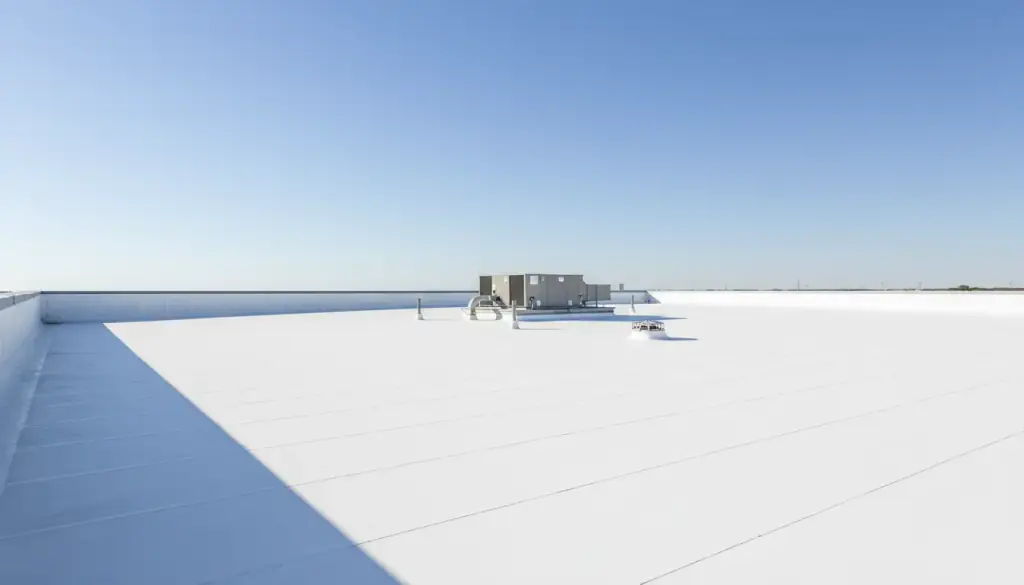
If you run a shop, an office or a warehouse in Lamar County, your roof has two jobs: keep the weather out, and protect the people and inventory inside. A pitched roof sheds water by gravity. A flat or low-slope roof has to do the same job with very little help from the angle, so it asks more of every seam, edge and penetration. When a flat roof leaks, the cause is usually one of a few predictable things.
Ponding water
Low-slope roofs are meant to drain, but they don't always do it well. A low spot in the surface, a drain that's partly blocked or a section that has settled can leave water standing on the roof for a day or more after the rain. Standing water adds weight, gives sun and heat more time to work on the surface and puts constant pressure on any seam or flaw underneath it. A roof that holds a puddle in the same spot after every rain is telling you something.
Drains, scuppers and gutters are part of this picture. Leaves, trash and grit can build up around them and slow the flow. Something as simple as a clogged drain can turn an ordinary rain into a leak above your stockroom.
Seams that open up
Many commercial roofs are made of sheets or membranes joined at seams. Those seams are where the roof is most exposed to movement. Texas swings from hot afternoons to cool nights, and the roof expands and contracts with it every day. Over time, a seam can lift, split or lose its bond, and a thin gap is enough to let water through. Seam trouble often starts small and gets worse after each storm, which is why catching it early matters.
Flashing at parapets, curbs and other penetrations
Wherever the flat surface meets something that rises from it, the roof depends on flashing. That includes parapet walls along the edges, curbs around rooftop equipment, vent pipes, skylights and the base of any unit that sits on the roof. These are the spots where leaks show up most often. Flashing can pull away from the wall, crack in the sun or lose its sealant, and water gets in behind it and runs down the wall or along the deck.
Rooftop equipment adds its own risk. Every cable, line or pipe that passes through the roof is a possible opening. When service crews walk the roof to reach those units, they can also scuff or puncture the surface without anyone noticing.
What an inspection looks for
A good roof inspection is a walk of the whole roof, not a glance from the edge. Here is what an inspector goes through.
- Low spots, standing water and the stains that mark where water has been sitting
- Seams that are lifting, splitting or separating, and any patches that have failed
- Flashing at parapets, curbs, vents and equipment, checking for gaps, cracks and loose edges
- Drains, scuppers and gutters, checking that they're clear and moving water off the roof
- Punctures, blisters and worn areas, especially around the places where people walk
- Signs of water inside, such as stained ceiling tiles or damp insulation below the roof
The point of an inspection is to find the cause, not just the drip. A leak you see inside the building can be several feet away from where the water actually gets in, so the person on the roof has to follow the evidence. From there the answer might be a targeted flat roof leak repair, or a larger conversation about a tear-off and new installation if the damage is widespread.
Planning around the business
Work on a commercial roof shouldn't mean shutting down for weeks, and it shouldn't leave your inventory exposed. Ask any contractor how they plan to protect the building and the property inside while the work goes on, who is supervising the crew and what the warranty covers. A written explanation of what was found and what they recommend is a reasonable thing to expect.
Reliant Roofing & Construction handles commercial roof inspections, tear-offs, repairs, installations and flat roof leak repairs, locally owned and fully insured, with a supervisor on site for every job and all work warrantied and guaranteed. To have your roof looked at, call (903) 784-1111 for a free estimate.
Reliant Roofing & Construction, (903) 784-1111
Call (903) 784-1111More articles
What to Check on Your Roof After a North Texas Hail or Wind Storm
You can learn a lot about storm damage without ever climbing a ladder.
How a Storm Damage Insurance Claim on Your House Usually Runs
Knowing the usual order of a claim takes most of the stress out of it.